


The Restaurant Shakeout Is Here. Only the Lean Ones Survive.
Something is happening in the restaurant industry right now, and anyone paying attention already feels it. Rents are up. Payroll is up. Beef is up. Utility bills are up. And the customers who used to walk through the door without thinking twice are now checking the menu prices before they sit down.
The result is a shakeout that is already underway. Pizza Hut is closing 250 locations in the first half of 2026. Papa John’s is shutting 300 restaurants. Wendy’s is closing hundreds more on top of the 140 it already shed. Jack in the Box is carrying $1.7 billion in debt. Smokey Bones’ parent company filed for bankruptcy in January. These are not small independent shops that ran out of luck. These are national chains with real estate teams, marketing budgets, and decades of experience, and they still could not make the math work.
Analysts point out that over the past three years, chain growth outpaced population growth in 36 states. Translation: the industry built more restaurants than the market could actually support, and now the bill is coming due. What’s happening is less a temporary rough patch and more a correction. A lot of restaurants that opened during easier years are not going to make it to 2027.
The ones that do survive will look different. Tighter menus. Tighter labor schedules. Tighter margins managed to the dollar. There is no room left for sloppy operations or running a restaurant by gut feel. The businesses coming out the other side of this will be lean, efficient, and running on real numbers instead of guesses.
Why the squeeze is happening from every direction at once
Labor. Minimum wage increased in 22 states heading into 2026, with Arizona, Colorado, Hawaii, Maine, Missouri, and Nebraska crossing $15 an hour for the first time. In states like California and New York, where wage floors have climbed past $16.50, operators who haven’t restructured their staffing are seeing labor costs rise 8 to 12 percent. Full-service restaurants are now trending toward 35 to 40 percent of sales just in labor, and that number has climbed nearly 10 percent since 2020. For most operators, there is no more fat left to trim. Staffing is already lean, and the wage increases keep coming anyway.
Protein. Beef and veal prices are projected to rise another 6.3 percent in 2026 on top of a 12.1 percent year-over-year jump recorded in March, and some USDA forecasts put the full-year increase as high as 18 percent. Ground beef is running $6.70 a pound, up more than 15 percent from last year. The cause is structural, not seasonal: the U.S. cattle herd is at its lowest level in 75 years, and herd rebuilding is expected to be slow. This isn’t a price spike that corrects itself in a quarter. Elevated protein costs are likely to stick around through at least 2027.
Energy. Electricity prices are climbing faster than inflation, with commercial rates in some regions jumping close to 30 percent in the past year alone. Energy typically runs 3 to 5 percent of a restaurant’s operating costs, which sounds small until you’re already fighting for margin on every other line item.
And on top of all of it, food costs overall are now roughly 35 percent above pre-pandemic levels, with restaurant menu prices expected to climb another 3.6 percent in 2026, outpacing grocery store inflation.
Customers are pushing back, and operators are raising prices anyway
Here is the part that makes this cycle especially dangerous: customers are tapped out at the exact moment operators need to charge more. A recent survey found 68 percent of consumers are cutting back on restaurant spending this year to prioritize affordability. Average weekly restaurant spend dropped to about $90 in February, down $25 from the previous June. Roughly a third of consumers say they’ve deliberately cut back on restaurant spending over the past six months.
And yet 71 percent of operators say they plan to raise menu prices again this year, up from 57 percent last year. Something has to give. Consumers are increasingly sorting themselves into two camps: trading down for deals, or trading up for a genuine experience worth paying for. Restaurants stuck in the middle, without a clear identity or a clear value proposition, are the ones losing ground fastest.
It’s not hard to see where this leads. Only 42 percent of restaurants were actually profitable last year. Rising costs on one side and price-resistant customers on the other is a vise, and a lot of operators are caught in the middle of it.
What separates the restaurants that make it
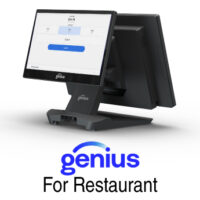
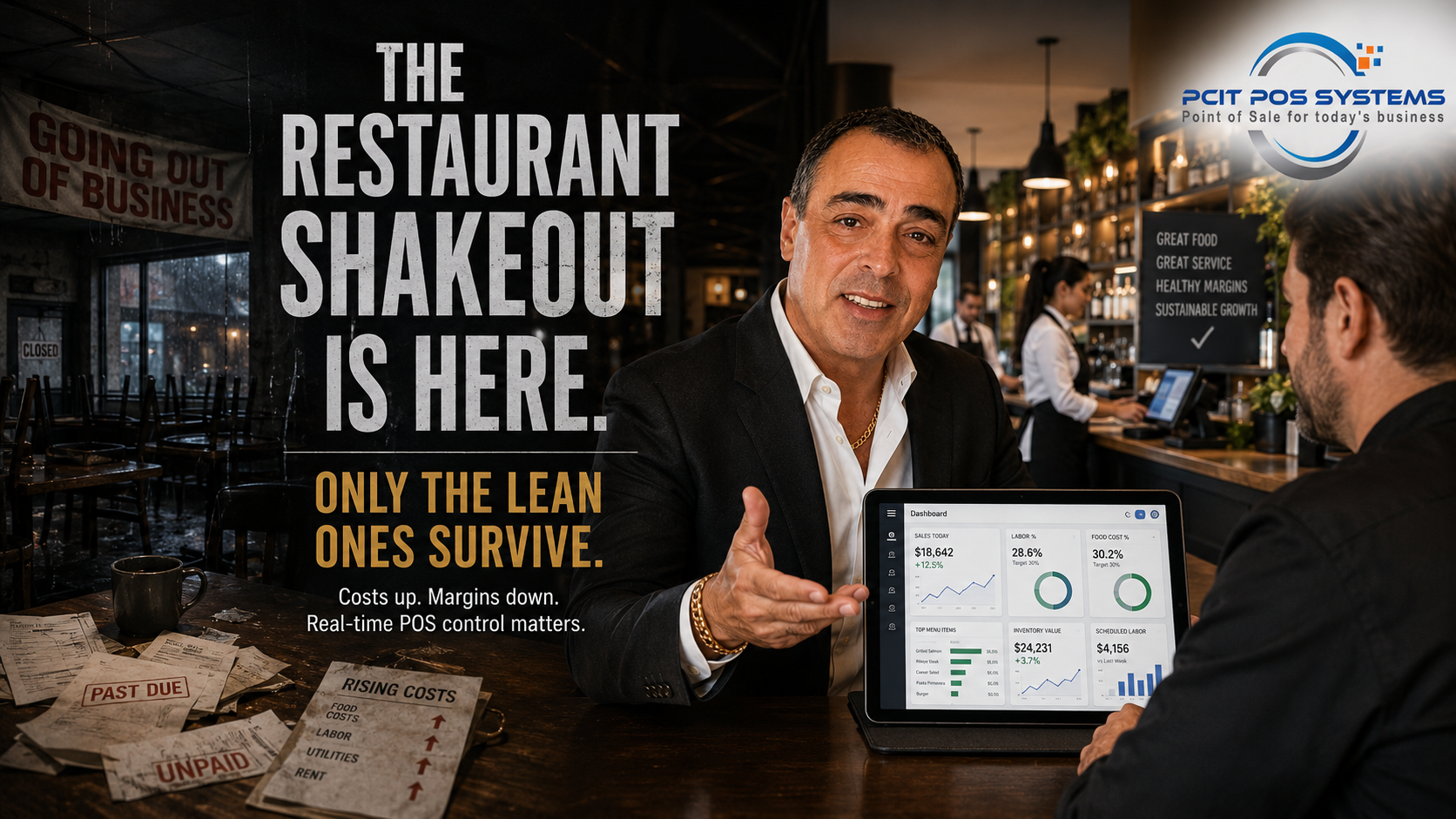
The restaurants surviving this shakeout aren’t the ones with the best food, necessarily. They’re the ones that know their numbers cold: exactly what each shift costs, exactly what each menu item earns, exactly where the waste is happening before it shows up as a loss at the end of the month. That level of visibility used to require a full back-office team. Now it’s built into the POS system running the front counter.
A modern POS platform gives an operator the tools to fight back on every one of these fronts.
On labor, POS-driven scheduling matches staffing to actual demand instead of habit. When the system shows the Friday 7 to 9 p.m. rush every week, you schedule for it. When it shows a dead Tuesday afternoon, you don’t. Restaurants using integrated scheduling tools are seeing labor cost savings up to 20 percent, and in an environment where labor is already 35 to 40 percent of sales, that’s not a minor efficiency gain. That’s the difference between a profitable month and a break-even one.
On food cost, integrated inventory tracking pulls ingredients out of stock automatically with every sale, flags shrinkage, and alerts a manager before a walk-in runs empty mid-shift. Operators running integrated inventory through their POS are reporting 5 to 10 percent food cost savings and 10 to 15 percent reductions in waste within the first year. With beef prices where they are right now, catching even a small percentage of waste matters more than it did two years ago.
On menu strategy, real-time reporting shows which dishes are actually making money and which ones are quietly eating labor and ingredient cost for no return. That’s how a smart operator adjusts a menu with real data instead of a hunch, right as protein costs are forcing everyone to look hard at what stays and what goes.
None of this works if the system goes down in the middle of a Friday night rush, which is exactly why the installation matters as much as the software. A POS system that’s actually built for a live restaurant environment, installed without shutting the doors or losing a single ticket, is the difference between a tool that helps you run lean and one more thing that goes wrong when you can least afford it.
The landscape ahead
Fewer restaurants. Sharper operators. Less patience for waste, guesswork, or a system that can’t tell you what’s actually happening on the floor in real time. That’s where this is headed, and it’s already started. The operators who treat their POS as a real management tool instead of just a cash register are the ones positioning themselves to be standing when the dust settles.
Sources:
- Restaurant Dive: Recent restaurant chain closures signal market correction
- FinanceBuzz: Restaurants most likely to go bankrupt and close in 2026
- The Bookkeeper: Restaurant labor costs in 2026
- TouchBistro: 2026 restaurant minimum wage rates and increases
- Feed & Grain: Food prices expected to rise 2.9% in 2026 as beef costs surge
- CBS News: Beef costs and CPI report, March 2026
- Meatingplace: Beef prices to continue climbing as USDA raises 2026 forecast
- Restaurant.org: Rising food costs and tight supplies
- Clean Air Task Force: Rising U.S. electricity costs
- FSR Magazine: Popmenu survey, nearly 70 percent of guests to reduce restaurant dining in 2026
- NRN: Consumers are trading down for deals in restaurants
- VantaInsights: Restaurant profit margins 2026
- Plum POS: How restaurant POS systems reduce operational cost in 2026